
Free visual inspection and a written scope of work before any mitigation begins - photos, moisture readings, and drying logs go in your claim file
The scope we write is the scope we bill. Anything new gets shown to you, in writing, before we touch it.
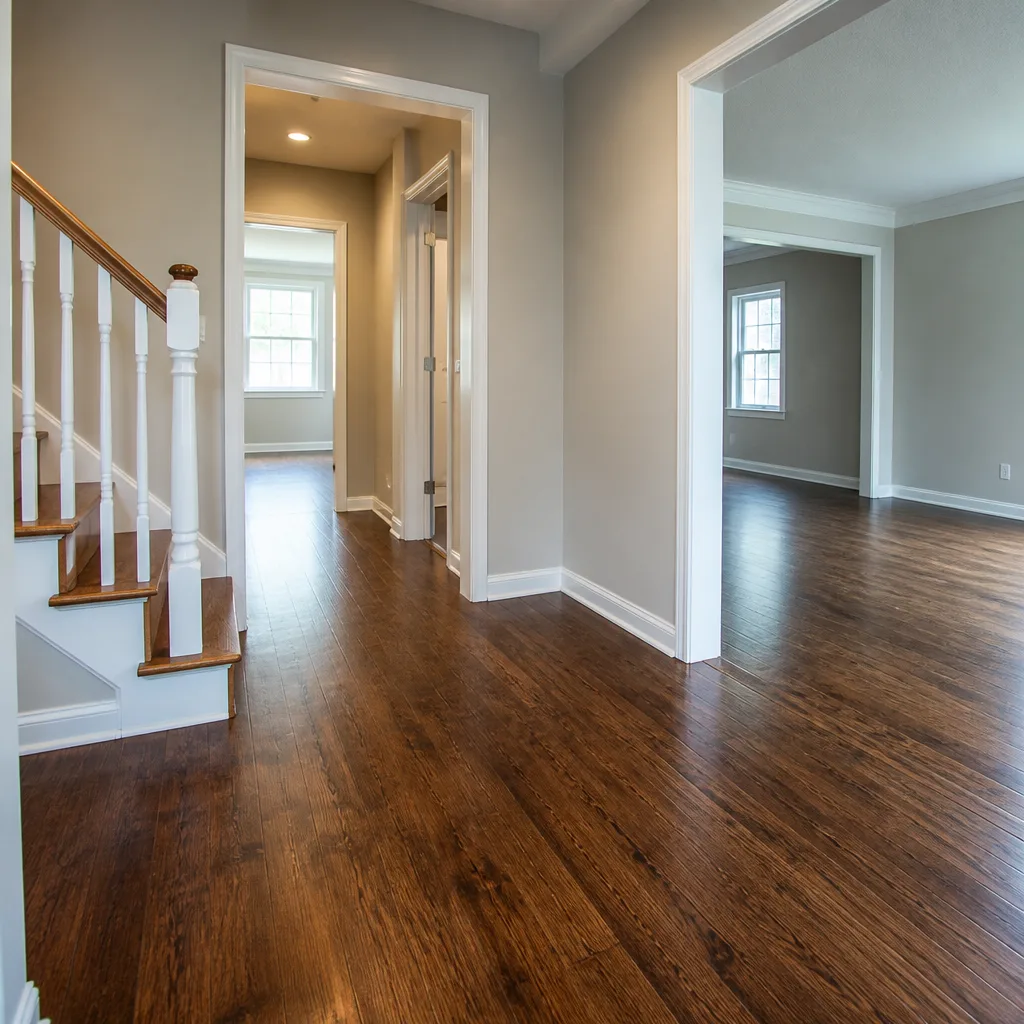
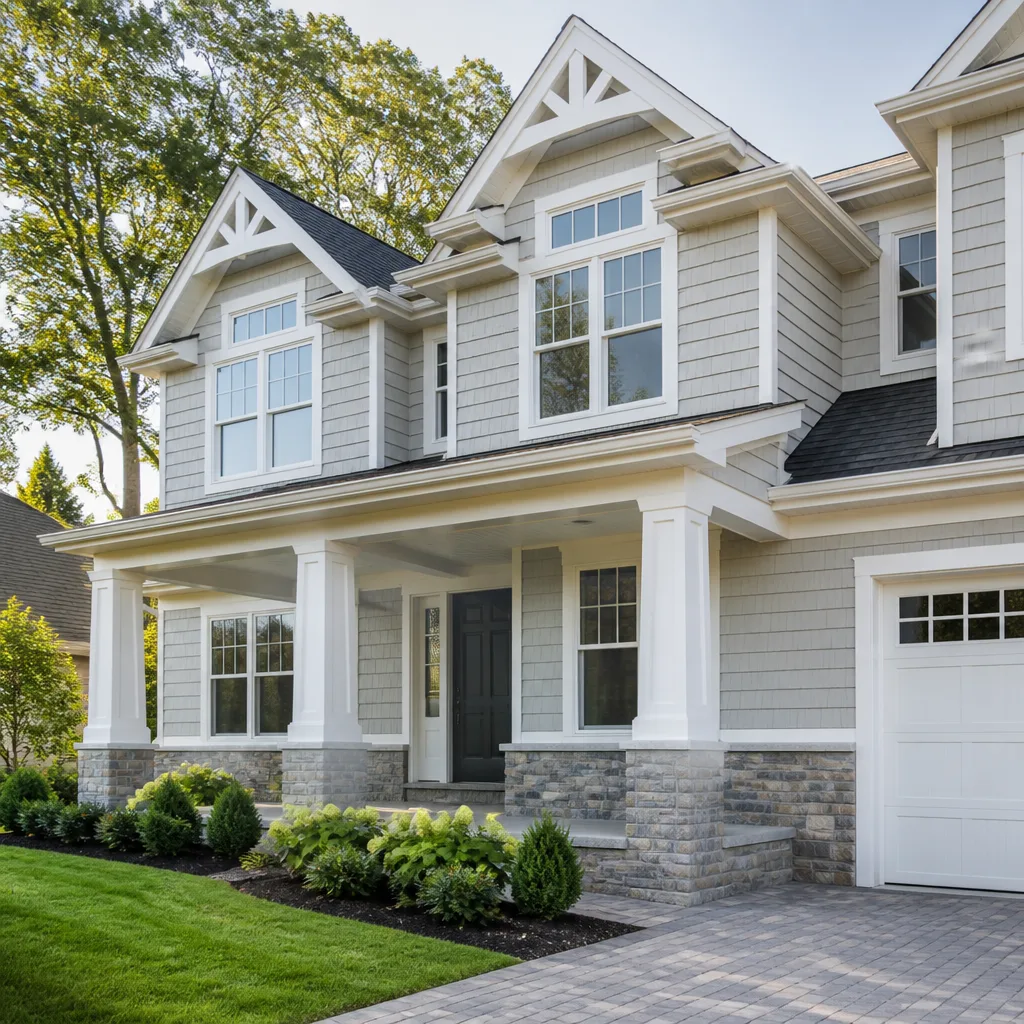
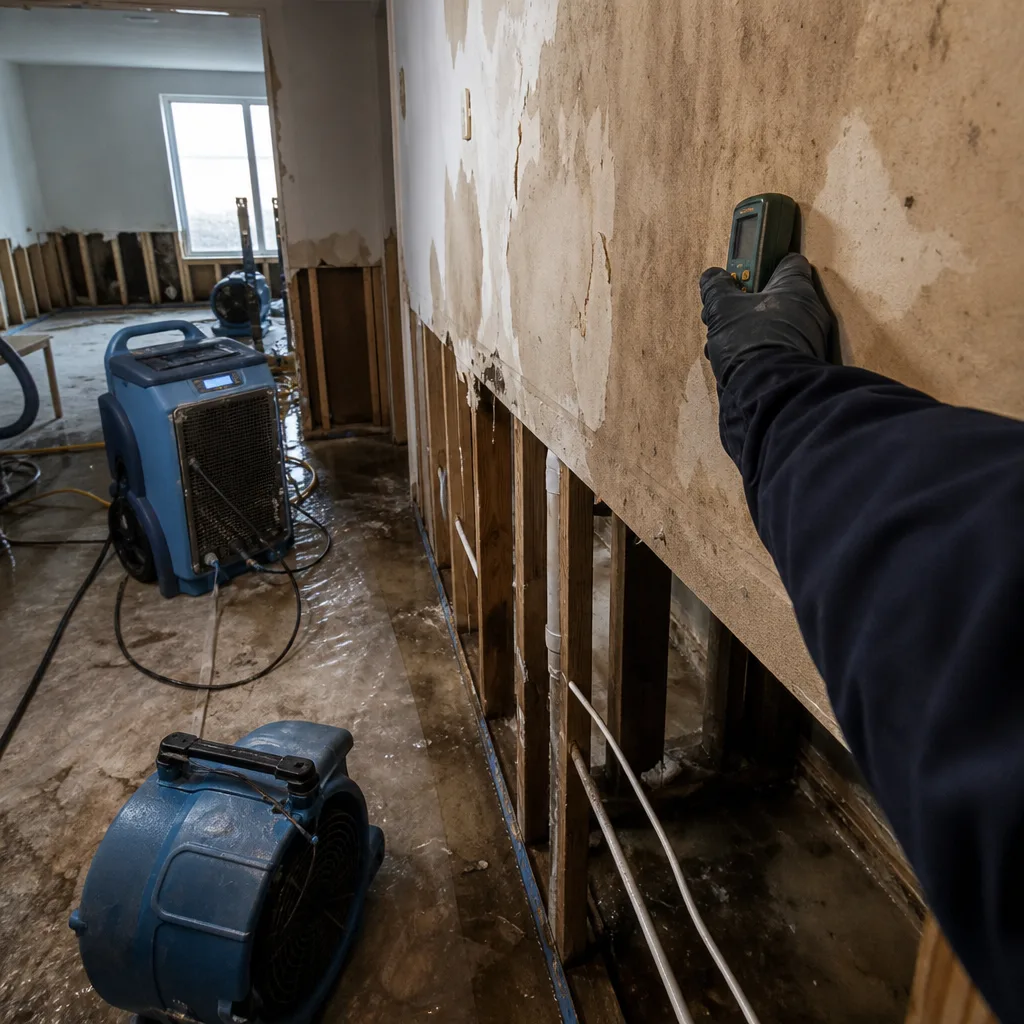 Before
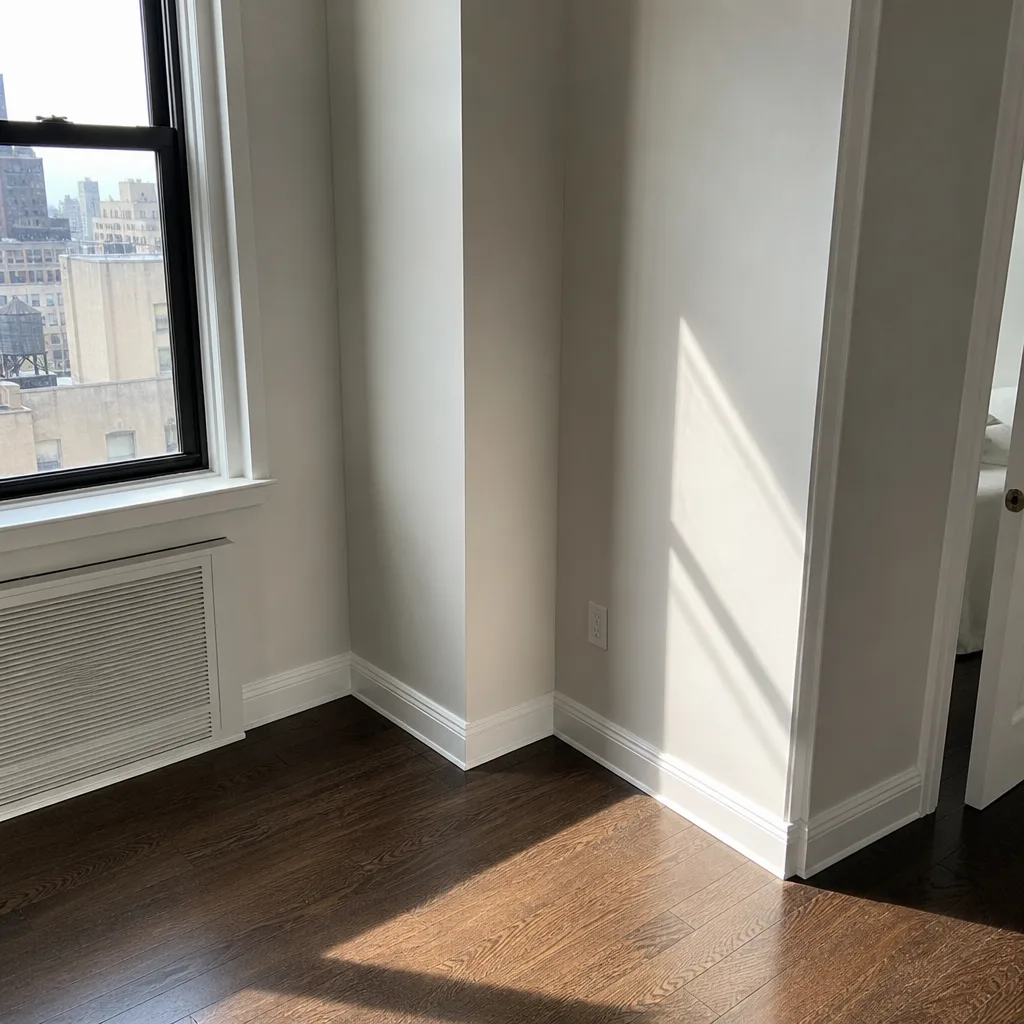 After
After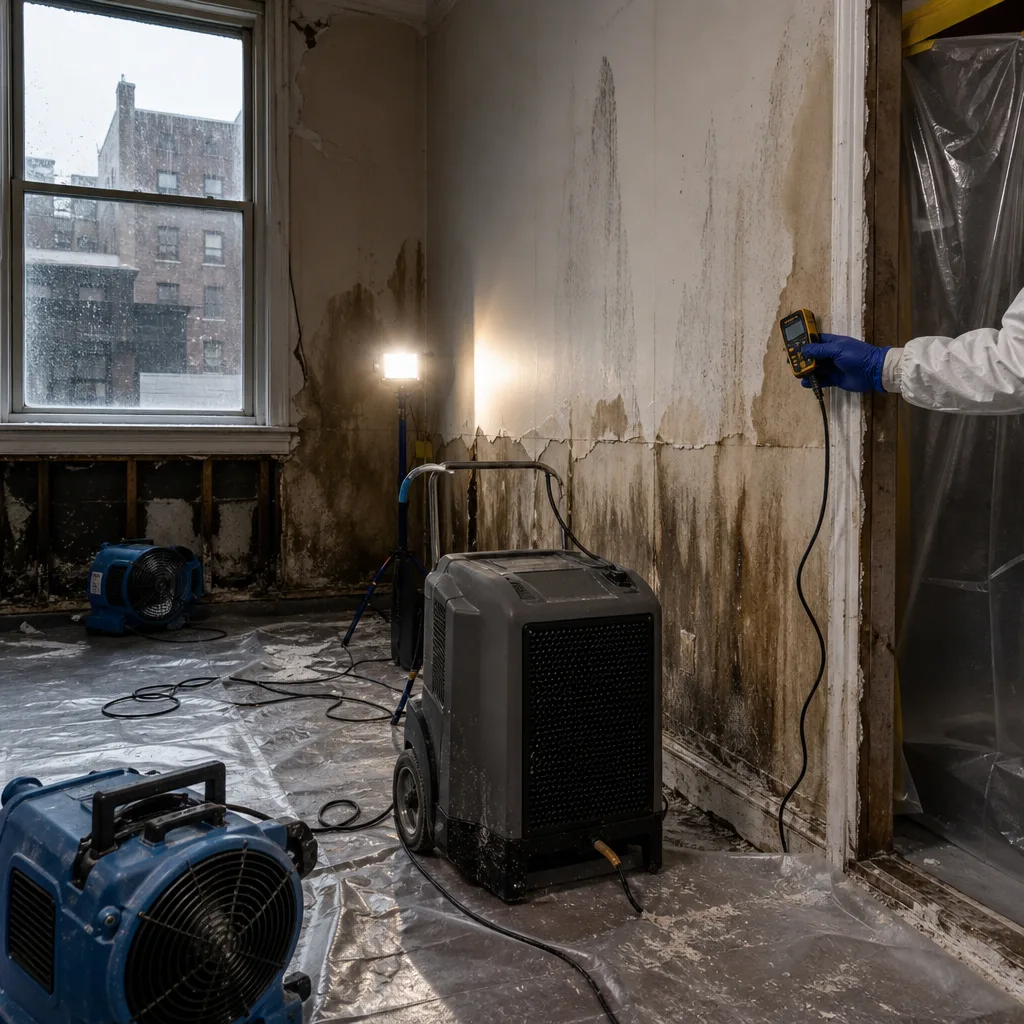 Before
 After
After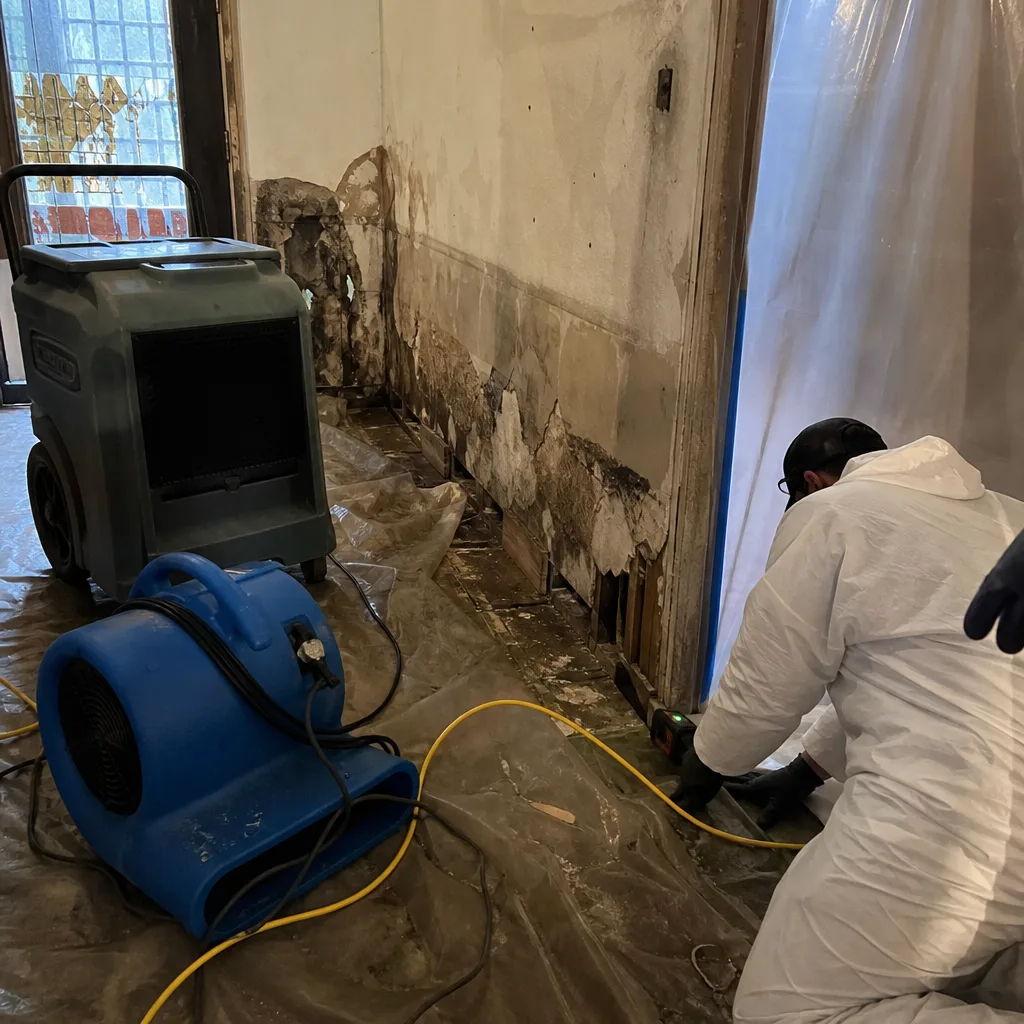 Before
 After
AfterDamage Restoration Before & After in Financial District, NY
We’ve restored over 12,000 homes since 2011, and every job started with a written price and ended with a photo record. These are the transformations we see in Financial District buildings, from century-old lofts to modern high-rises, documented the way your adjuster needs to see them.
Recent Transformations
Water Damage Restoration: Burst Supply Line in a Pine Street Loft
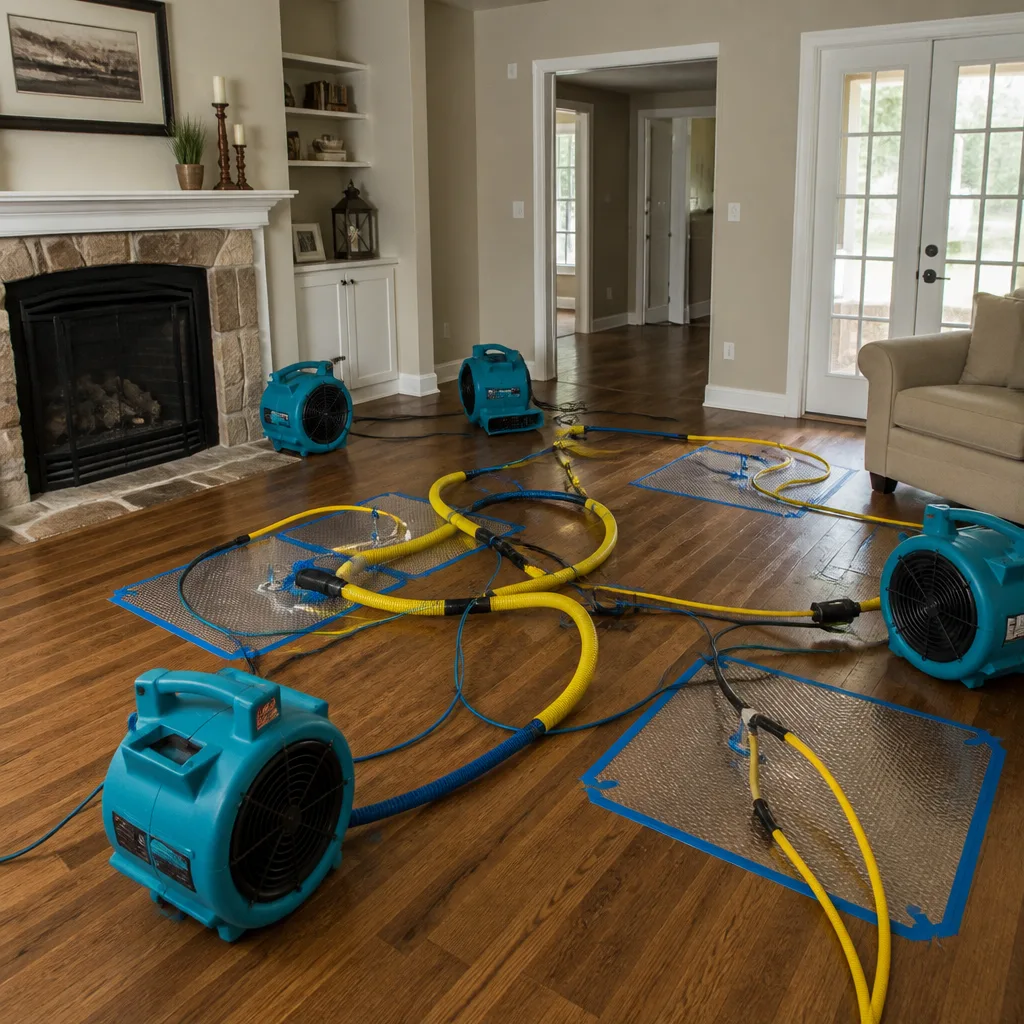
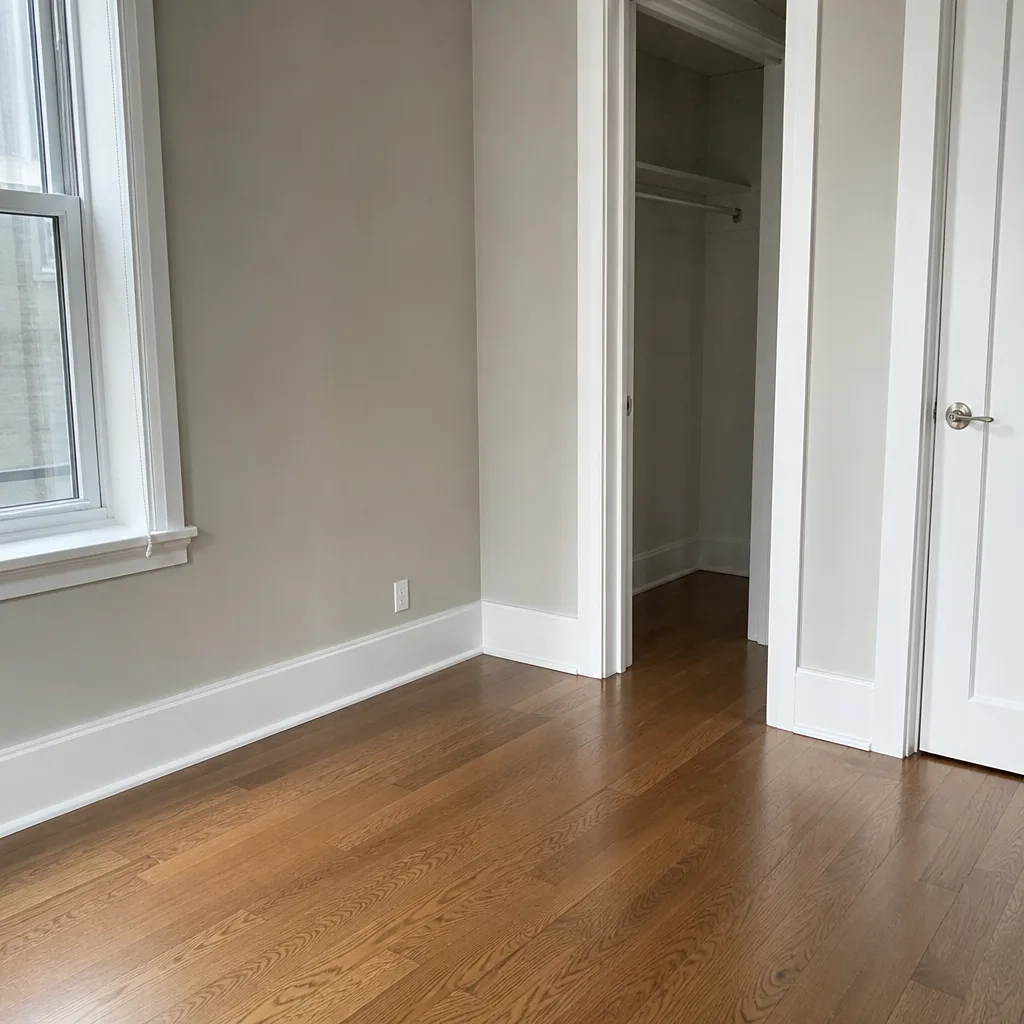
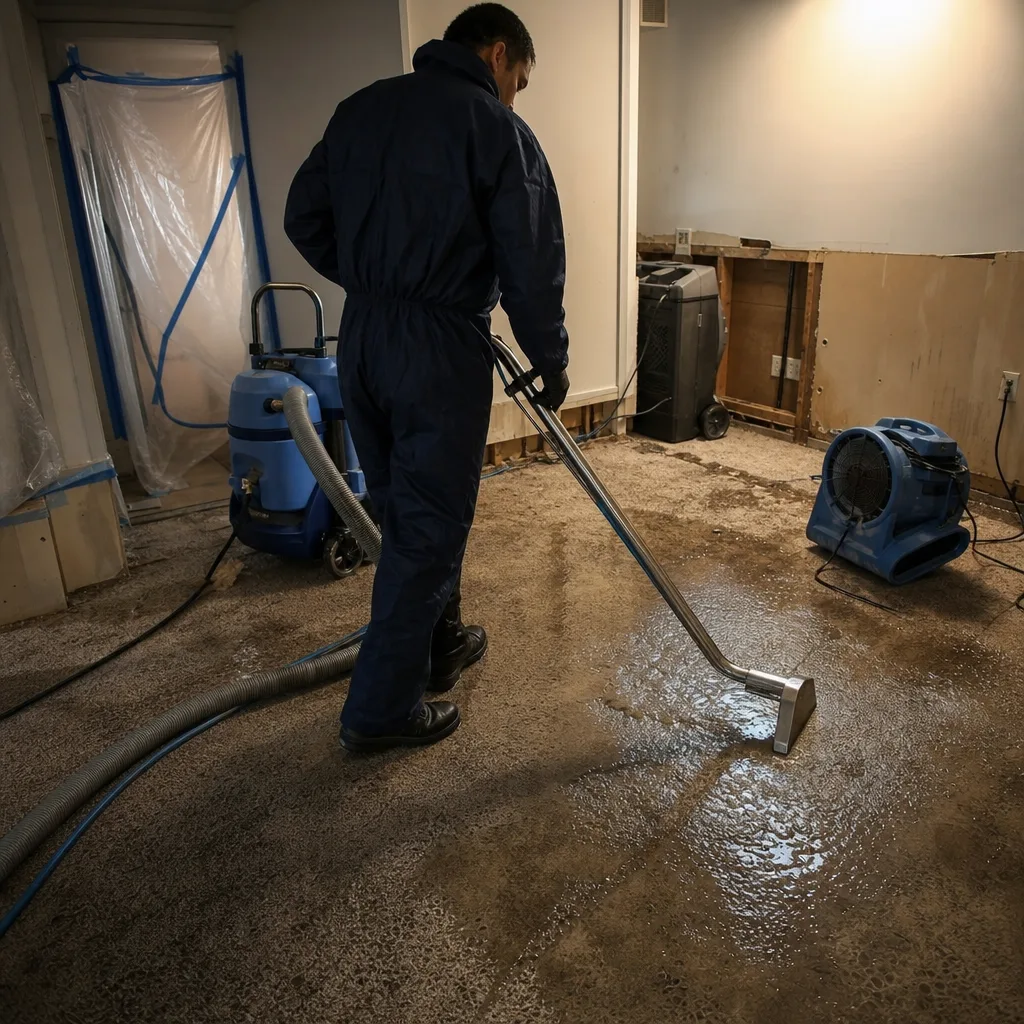
The supply line to a vintage pedestal sink failed at 2 a.m. on a Saturday, sending water through the original maple flooring of a third-floor Pine Street loft for roughly six hours before the super shut the main. Moisture readings at arrival showed 28% wood moisture content, well above the 16% threshold where mold colonization becomes likely within 72 hours. We deployed a Phoenix 200 MAX LGR dehumidifier and Injectidry HP60 panel drying system to create negative vapor pressure differentials, pulling moisture from the subfloor without removing the tongue-and-groove boards. Psychrometric data was logged every four hours and shared with the carrier’s adjuster. The floor dried to 12% in 58 hours, saving approximately $14,000 in replacement costs versus a tear-out. The owner received the complete photo record, drying log, and signed Haven Standard warranty before we cleared the equipment.
Mold Remediation: Hidden Colonization Behind FIDI Building’s HVAC Closet
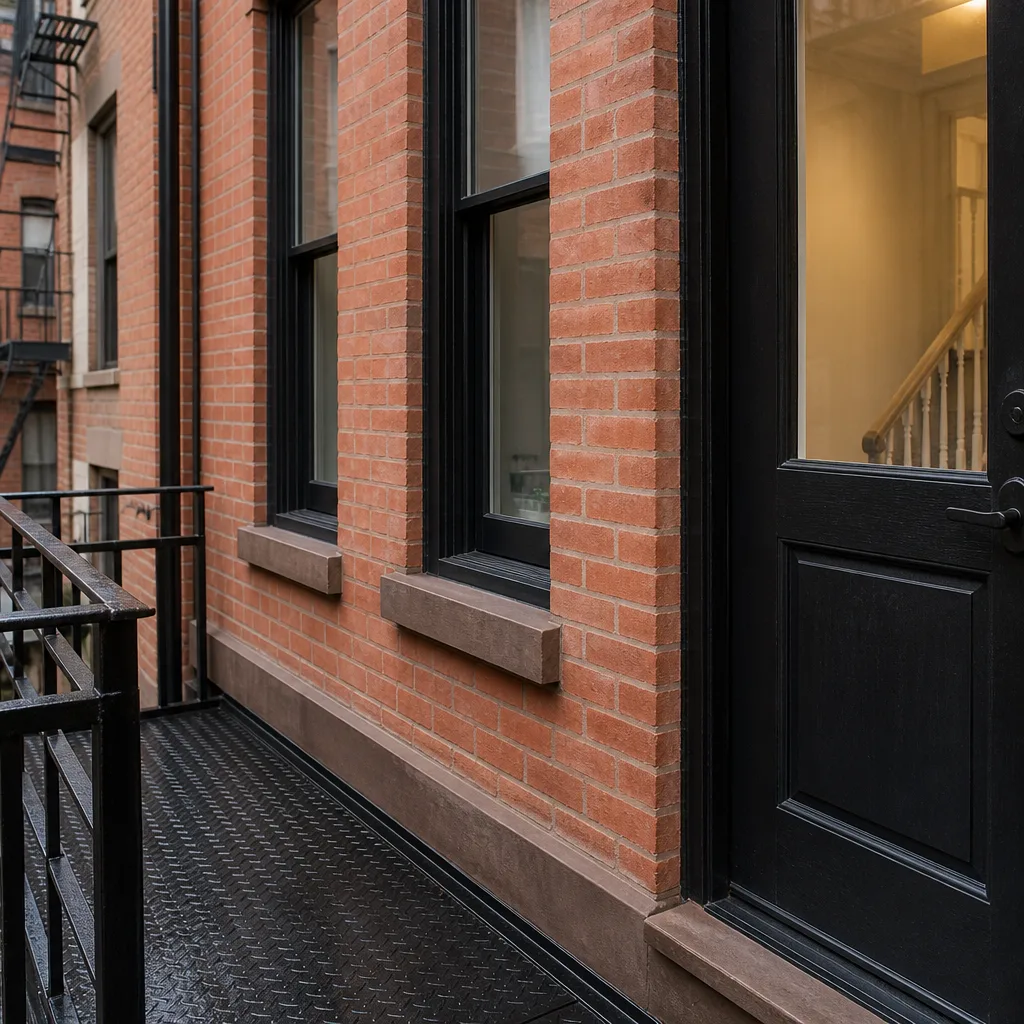
A persistent musty odor in a Water Street building’s common hallway led the property manager to our door after two other companies quoted full gutting without identifying the moisture source. We ran thermal imaging and found a 4-degree temperature differential behind the HVAC return closet, indicating evaporative cooling at a hidden leak. Cutting the inspection opening revealed 22 square feet of Stachybotrys chartarum on the gypsum board’s paper facing, fed by a failed condensate drain pan dripping at 0.3 gallons per day. We established negative air containment with HEPA filtration, removed the affected drywall under IICRC S520 protocol, HEPA-vacuumed the cavity to 99.97% at 0.3 microns, and applied a borate-based mold-resistant treatment to the remaining framing. The new pan was installed by the building’s mechanical contractor, and we provided the management company with pre- and post-remediation air sampling results, the photo record, and the written scope under Haven Standard, Clause 1. Total downtime for the hallway: 31 hours.
Fire & Smoke Damage Restoration: Kitchen Grease Fire in a Maiden Lane Condo
A pan-fried steak got away from a Maiden Lane resident on a Sunday evening, producing a protein fire that left nearly invisible but deeply penetrating residue across 380 square feet of open kitchen and living space. Protein fires are insidious: the grease vaporizes, deposits a nearly clear film, and carries odor molecules into porous materials that standard cleaning won’t reach. We started with ultrasonic cleaning of the oak cabinet doors and drawer fronts off-site, then thermal fogged the structure with a solvent-based deodorizer that replicates the fire’s heat-driven penetration pattern to neutralize odor at the molecular level. Air scrubbers ran for 72 hours, with VOC readings dropping from 0.47 ppm at start to 0.03 ppm at clearance. The resident’s insurer initially questioned the scope; we provided the full photo record, the thermal fogging equipment log, and the moisture and VOC data in a single PDF that moved the claim from pending to paid in 48 hours. The kitchen was fully functional before the following weekend.
Sewage Cleanup: Backed-Up Main in a Pearl Street Basement
A municipal main backup on Pearl Street sent raw sewage through a floor drain in a commercial basement at 6 a.m. on a Tuesday, covering 890 square feet with six inches of Category 3 black water before the building engineer could block the drain. Category 3 water carries enteric pathogens, and porous materials in the water line are non-salvageable per IICRC S500. We extracted, removed the waterlogged drywall and insulation to 24 inches above the visible water line, and pressure-washed the concrete slab with a quaternary ammonium antimicrobial. The slab was then sealed with a penetrating silane-siloxane treatment to prevent wicking of residual contaminants. We coordinated directly with the property’s carrier and the City of New York’s claims office, providing the photo record, waste manifest, and ATP bioluminescence clearance testing showing RLU readings below 30 on all contact surfaces. The tenant’s inventory was relocated to our contents cleaning partner; 73% was restored and returned. Work started within 90 minutes of the call, and the space passed health department inspection on Thursday morning.
Storm & Disaster Restoration: Hurricane Remnant Flooding, South Street Seaport Adjacent
A hurricane remnant pushed storm surge up the East River in October, flooding the ground floor of a mixed-use building adjacent to South Street Seaport to an 18-inch depth. The water carried sediment, petroleum sheen from street runoff, and salt, creating a mixed Category 2/3 loss with elevated chloride content that accelerates corrosion in electrical components. We gutted to four feet throughout, documenting each wall section with photos tagged to the room diagram for the NFIP adjuster. Structural drying ran for six days with six Phoenix R200 units and 32 airmovers, with daily moisture logs showing progressive reduction in both wood framing and concrete moisture vapor emission rates. Reconstruction used flood-resistant materials per FEMA P-348: paperless drywall, closed-cell spray foam in stud cavities, and tile flooring with epoxy grout. The owner received the complete documentation package, including the drying log, the reconstruction scope with line-item pricing under Haven Standard, Clause 1, and the 365-Day Done Right Promise. The restaurant tenant reopened 23 days after the water receded.
Reconstruction & Cleanup: Post-Demo Build-Back in a Broad Street Office
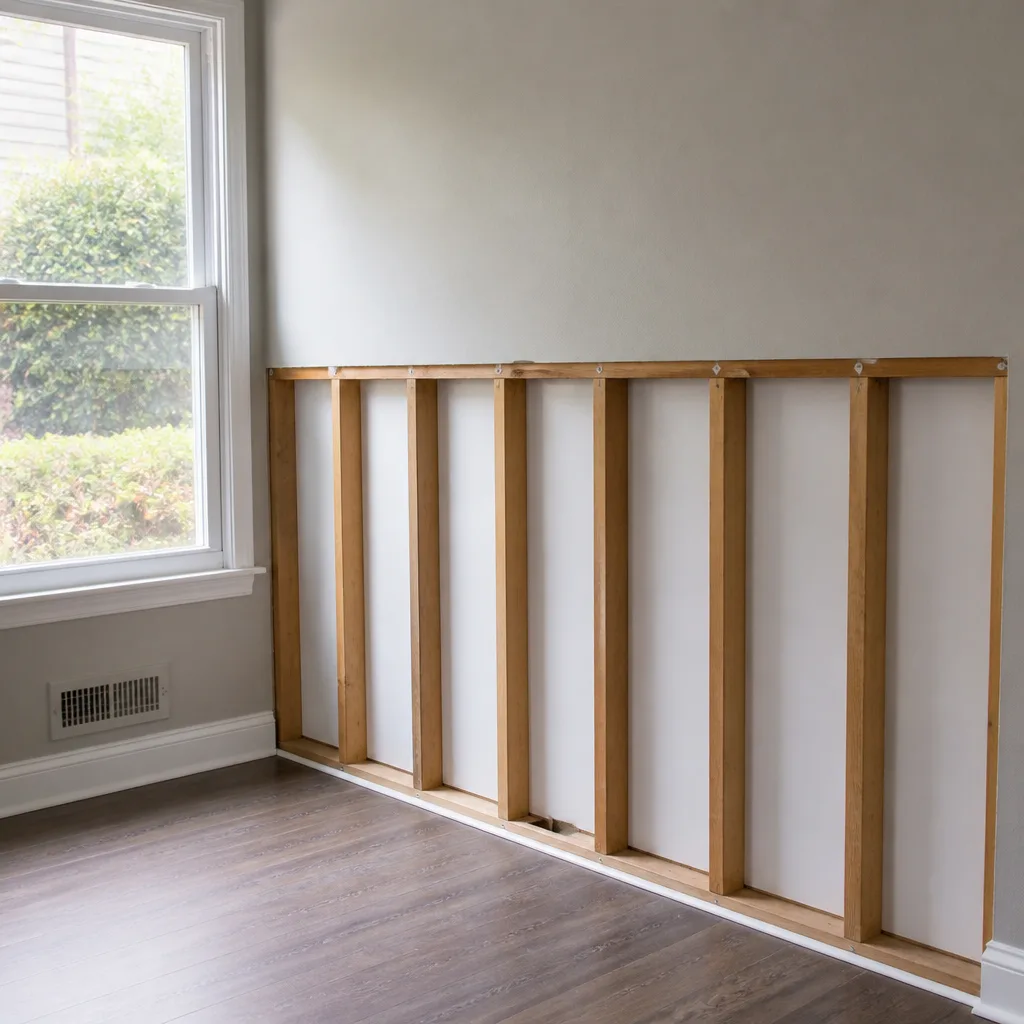
A neighboring building’s fire required asbestos abatement in a Broad Street office suite, leaving 2,400 square feet of bare stud framing and a client with 34 employees and no workspace. Reconstruction is scoped, scheduled, and priced in writing like a remodel, not dispatched for same-day arrival. We walked the abatement clearance with the client’s environmental consultant, measured every surface, and delivered a written scope with line-item pricing within 72 hours under Haven Standard, Clause 1. The build-back included Level 5 drywall finish for the reception area’s critical lighting, commercial carpet tile with 24-inch squares for future flexibility, and custom millwork matching the original 1920s door casings that the client had specified in the lease. The project ran 19 days from written approval to certificate of occupancy, with weekly photo updates to the property manager and the tenant’s insurance carrier. No additions to the written scope appeared on the final invoice.
Want Results Like These?
Every job here started with a phone call to a live person, not a voicemail tree. We’re available 24 hours a day, 7 days a week at (551) 212-1492. We’ll answer your questions, schedule an assessment, and give you a written price before any work starts, every time, with no exceptions. Haven Standard, Clause 1. Bring a competitor’s written estimate and we’ll review it at no charge.
Written by Alicia Brennan, Owner at Back to Dry Restoration Financial District, serving Financial District since 2011.