
Last updated September 22, 2026
Free visual inspection and a written scope of work before any mitigation begins - photos, moisture readings, and drying logs go in your claim file
The scope we write is the scope we bill. Anything new gets shown to you, in writing, before we touch it.

 Before
 After
After Before
 After
After Before
 After
AfterDamage Restoration Permits, Codes & Inspections in NY: What You Need to Know
A Financial District homeowner had a legitimate $31,000 mold remediation claim delayed six months when the insurer’s adjuster discovered that the prior owner’s flood repair had included unpermitted electrical rerouting. The new claim could not be scoped until the unpermitted condition was documented and resolved. In New York City, permits and inspections are not bureaucratic friction. They are the paper trail that proves work was done to code, which is exactly the evidence an insurer needs to pay a rebuild invoice without a fight. This guide maps which restoration tasks legally require a permit in NYC, how emergency repairs can be documented correctly, and what happens to a claim when unpermitted work is discovered mid-job. For related reading, see our Damage Restoration Warning Signs: A Financial District Homeowner’s Reference Guide.
Quick Answer
In New York City, most structural repairs, electrical work, plumbing alterations, and mold or asbestos remediation require permits from the Department of Buildings (DOB), Department of Environmental Protection (DEP), or Department of Health and Mental Hygiene (DOHMH). Emergency repairs can proceed without a permit if they are documented with photos and filed within five business days, but failure to document properly voids insurance coverage for subsequent damage. Restoration contractors who skip required inspections create compliance problems that delay or deny claims.
Table of Contents
- DOB Permits vs. Emergency Repair Exemptions
- Fire-Resistive Construction Requirements in Financial District Buildings
- DEP and DOHMH Protocols for Mold and Asbestos
- Reading a Certificate of Occupancy and BIS Alteration History
- Failed or Missed Inspections: Timeline and Cost Responsibility
- How Permits Affect Insurance Claim Documentation
- Financial District-Specific Compliance Considerations
- Common Mistakes to Avoid
- When to Call a Professional
- Frequently Asked Questions
BeforeAfterDOB Permits vs. Emergency Repair Exemptions
New York City’s Department of Buildings divides restoration work into two categories: work that requires a permit before it begins, and emergency repairs that can proceed immediately but must be documented and filed retroactively. The distinction matters because insurers treat them differently on claims.
Work that always requires a DOB permit includes structural alterations to load-bearing walls, any electrical work beyond replacing a like-for-like outlet or switch, plumbing changes that reconfigure supply or waste lines, and replacement of windows in buildings designated as landmarks or located in historic districts. In the Financial District, where many buildings date to the 1920s or earlier and some carry Landmarks Preservation Commission designation, window replacement after water or fire damage routinely requires both DOB and LPC approval.
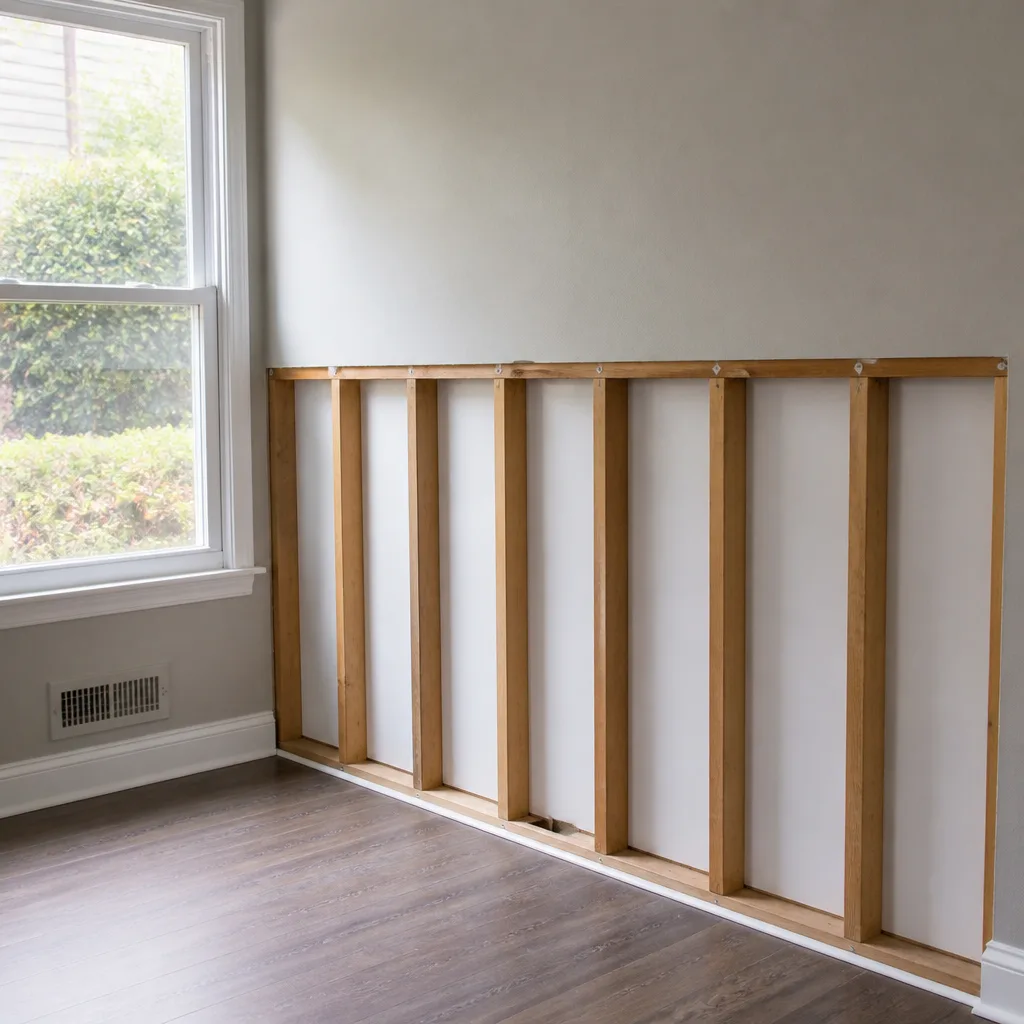
Emergency repair exemptions apply to conditions that present immediate danger to life, health, or property. Burst pipes causing active flooding, fire-damaged structural elements at risk of collapse, and compromised electrical systems with active shorts all qualify. The exemption allows a contractor to stabilize the condition without waiting for permit issuance. But here is where claims fail: the exemption is not a free pass. The contractor must photograph the emergency condition before work begins, document every action taken, and file a retroactive application with DOB within five business days. We have seen insurers deny $40,000 water damage claims because a contractor performed emergency demolition of wet drywall but never filed the required Emergency Work Notification, leaving no official record that the demolition was code-compliant.
The correct sequence for emergency work is:
- Photograph the emergency condition with timestamps before touching anything.
- Perform only work necessary to stabilize the immediate hazard.
- File Emergency Work Notification (EWN) with DOB within five business days, including the photo documentation.
- Apply for the full permit for permanent repairs before proceeding with reconstruction.
- Schedule and pass all required inspections before closing the permit.
At Back to Dry Restoration Financial District home, our crews carry tablets that timestamp every photo to the second. The photo record becomes part of the EWN filing and the insurance submission simultaneously. This is not extra documentation. It is the documentation that makes the claim payable.
Fire-Resistive Construction Requirements in Financial District Buildings
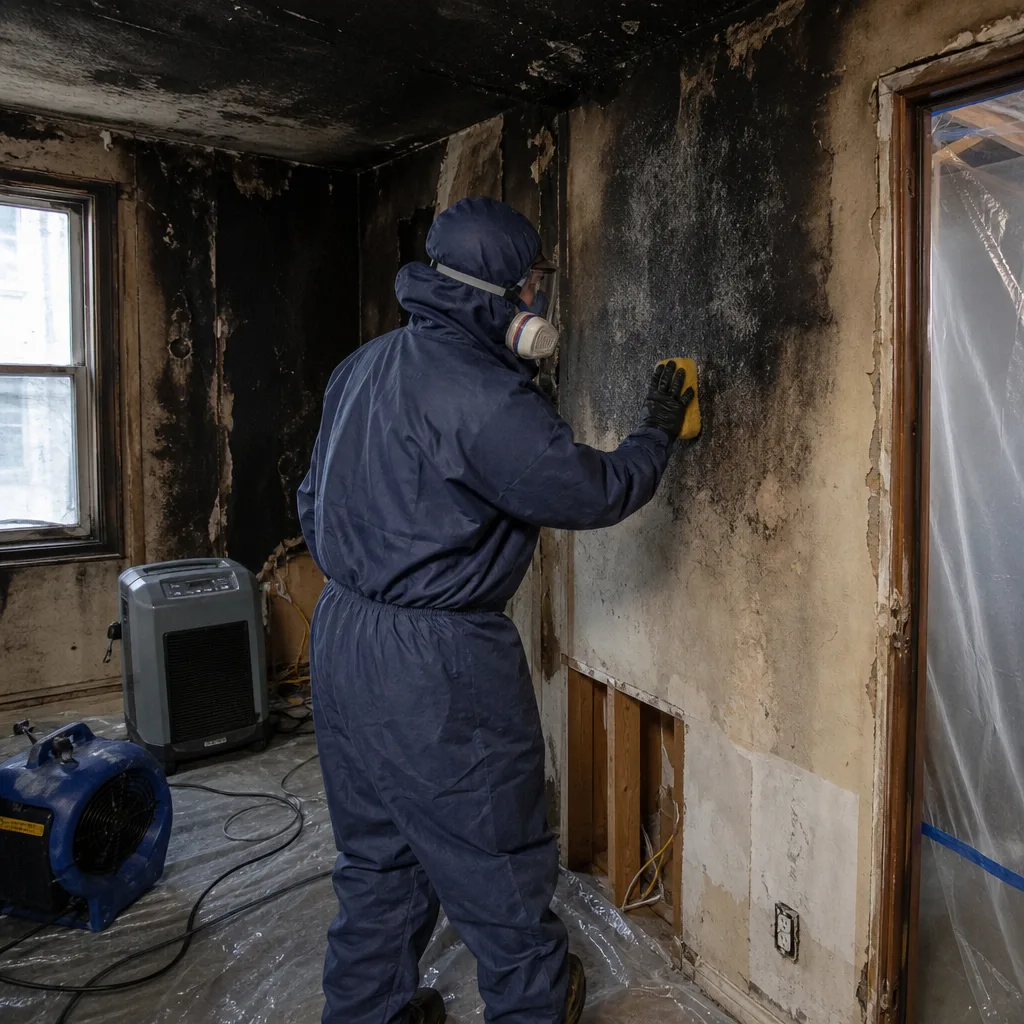
Most Financial District buildings constructed before 1968 are Class I or Class II fire-resistive construction under NYC Building Code definitions. This means structural elements, floor assemblies, and many wall assemblies are required to maintain specific fire ratings, typically one to four hours depending on the building type and height. When fire, water, or mold damage requires removal of these assemblies, the replacement materials and methods must restore the original fire rating exactly.
This is not a suggestion. It is a code requirement with inspection checkpoints. A contractor who replaces a fire-rated gypsum ceiling with standard drywall has created a code violation that DOB inspectors will flag, and more importantly, that an insurance adjuster may use to reduce or deny the rebuild portion of a claim. The adjuster’s position: the scope of work must include code-compliant materials, and if the contractor used non-compliant materials, the insurer is not responsible for the cost of redoing the work.
Common fire-resistive restoration requirements in Financial District buildings include:
- Type X gypsum board (5/8-inch minimum) for one-hour rated partitions, with specific fastener spacing and joint treatment.
- Fire-resistant insulation in floor-ceiling assemblies, often mineral wool or ceramic fiber, installed to maintain the stamped assembly rating.
- Penetration seals around pipes, conduits, and ducts passing through fire-rated assemblies, using intumescent sealants or firestop collars tested to ASTM E814 or UL 1479.
- Restoration of fire-rated doors and frames, including proper clearance tolerances and self-closing hardware, after water or smoke damage.
We specify these materials by manufacturer and rating in our written scopes. The scope is delivered before work begins, under Haven Standard, Clause 1. When the adjuster reviews the invoice, every material classification is already documented to the code edition in force at the time of construction. This is how a restoration invoice becomes a payable claim.
Psychrometric data, the measurement of temperature, relative humidity, and vapor pressure differential that governs our drying protocols, is documented alongside the fire-resistive assembly restoration. The drying log and the permit file become two halves of the same documentation package.
DEP and DOHMH Protocols for Mold and Asbestos
Mold remediation and asbestos abatement in New York City trigger overlapping jurisdiction from multiple agencies, and the filing sequence is not intuitive. Getting it wrong stops work and freezes insurance payments.
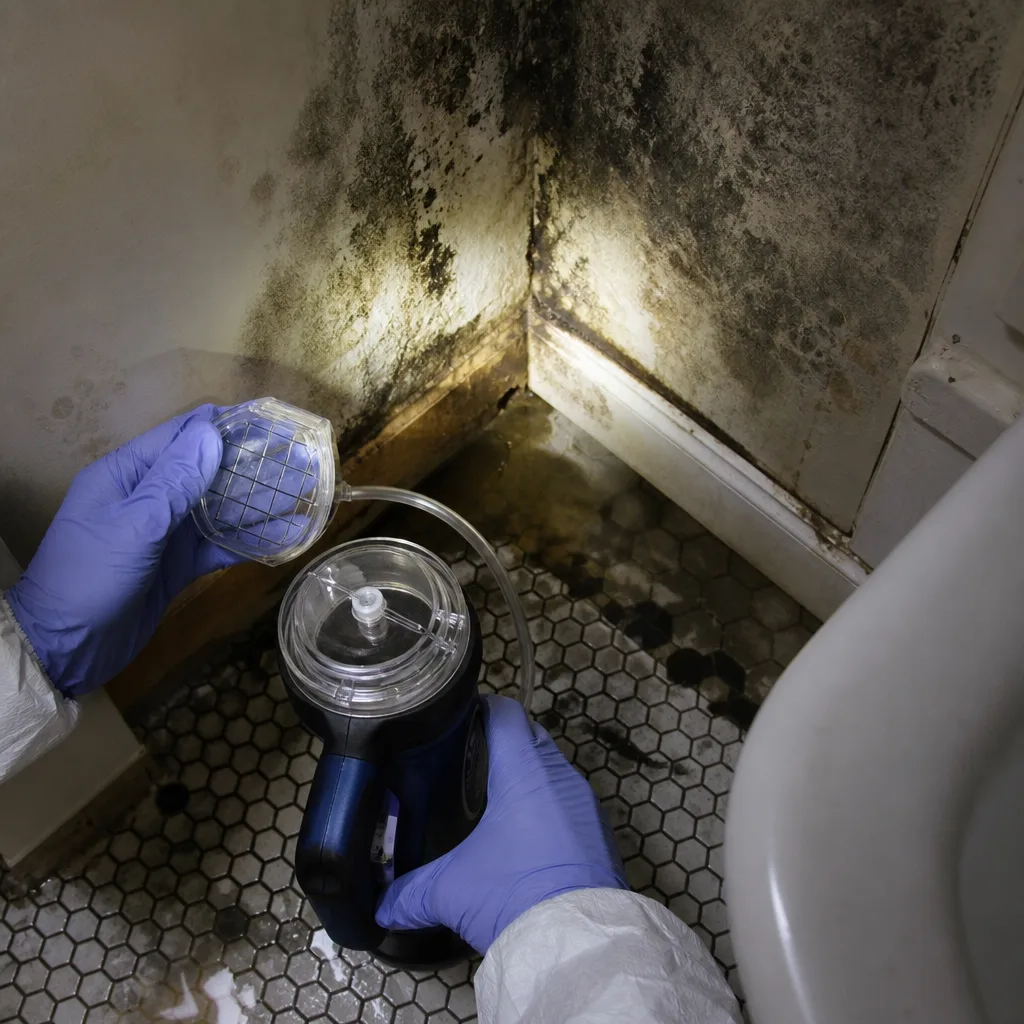
For mold remediation, NYC DOHMH requires a Mold Assessment by a licensed Mold Assessor before remediation begins in any building where mold covers more than ten square feet in a single room or where HVAC systems are contaminated. The Assessor must be independent of the remediation contractor. The assessment produces a Mold Remediation Plan, which the remediation contractor must follow. After remediation, the Assessor returns to conduct a post-remediation assessment and issue a Mold Remediation Clearance Certificate. Only then can reconstruction begin.
We have handled Financial District jobs where a contractor-often a homeowner attempting DIY vs Professional Damage Restoration-began demolition of mold-contaminated drywall before the Mold Assessment was completed. DOHMH violation notices followed. The insurer declined to cover the remediation costs because the work was performed outside the required protocol, and the homeowner faced $18,000 in uncovered expenses plus the cost of a second, properly supervised remediation.
Asbestos adds DEP and EPA layers. Any building material suspected of containing asbestos must be sampled and analyzed by a NYSDOL-licensed inspector before disturbance. In Financial District buildings constructed before 1981, this includes plaster, joint compound, floor tiles, pipe insulation, and roofing materials. If asbestos is present, a DEP-permitted abatement contractor must perform removal under a written project design, with air monitoring and final clearance sampling. The DEP issues a completion certificate that must be filed with DOB before the related restoration permit can be closed.
The filing sequence for combined mold and asbestos work is:
- Asbestos survey by licensed inspector (required before any disturbance).
- Mold Assessment by licensed Assessor (required before remediation).
- Asbestos abatement permit from DEP, if asbestos is present.
- Mold Remediation Plan filed with DOHMH.
- Abatement completion and DEP certificate.
- Mold remediation under the Remediation Plan.
- Post-remediation Mold Assessment and Clearance Certificate.
- DOB permit for reconstruction, with asbestos and mold certificates attached.
Our Mold Remediation in Financial District service coordinates this sequence internally. The written scope includes every required filing and its deadline, so the homeowner and the adjuster know exactly when each gate opens and closes.
Reading a Certificate of Occupancy and BIS Alteration History
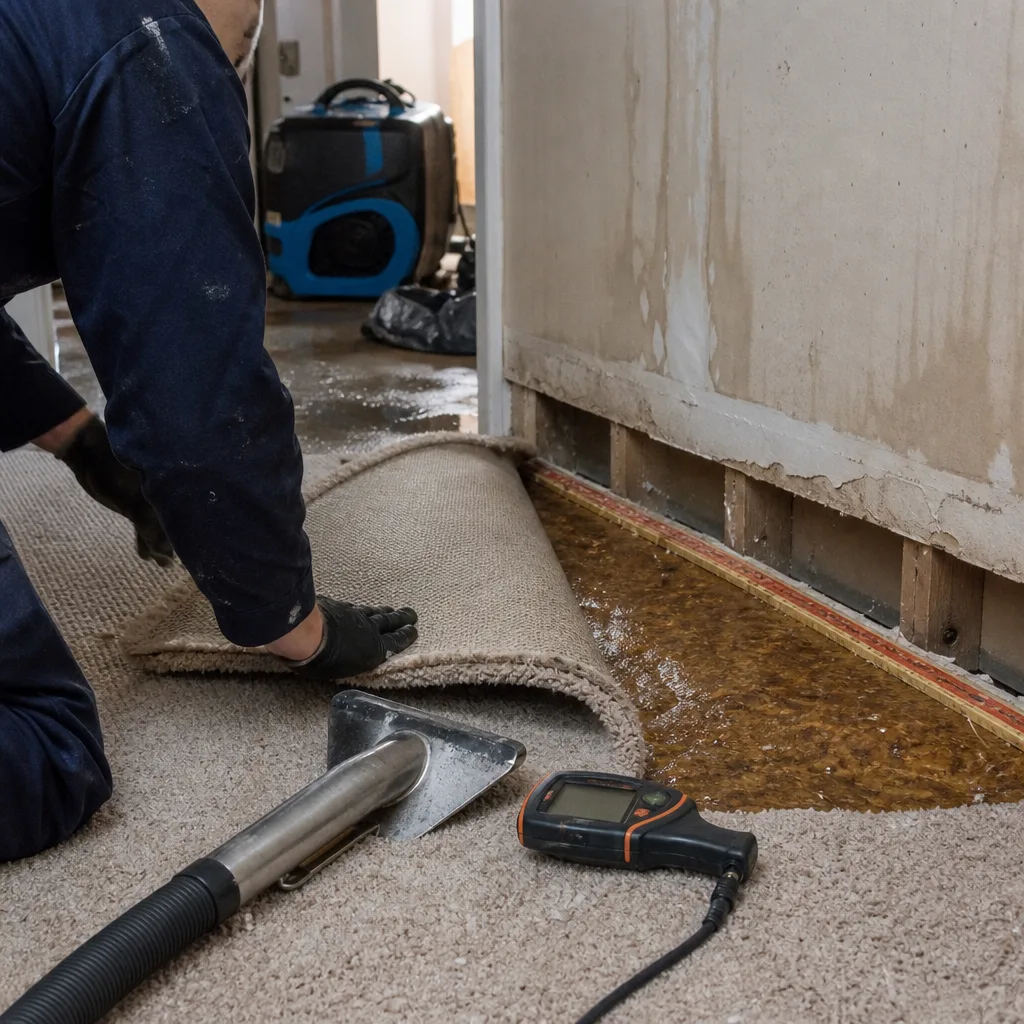
Every insurance rebuild scope depends on establishing the pre-loss permitted condition of the building. In NYC, this baseline is found in two documents: the Certificate of Occupancy (CO) and the Building Information System (BIS) alteration history. Knowing how to read them, or knowing that your restoration contractor knows how, prevents claim disputes before they start.
The Certificate of Occupancy states the legal use group, occupancy type, and construction class of the building. It also lists any conditions of approval that restrict alterations. In the Financial District, many converted office buildings carry CO conditions that require sprinkler system upgrades or egress modifications when floor plans change. A water damage restoration that requires demolition of partition walls may trigger these conditions if the walls were part of a prior legal conversion. The insurer’s scope must account for the cost of any triggered upgrades, but only if the pre-loss condition is documented as legally permitted.
The BIS alteration history shows every DOB filing on the property, including permits, violations, and Certificates of Occupancy issued. This is where unpermitted work surfaces. We pull BIS records at the start of every significant restoration job in Financial District. In 2022, we found that a South William Street condo had a 2019 bathroom renovation with no associated plumbing permit. The current water damage originated in that bathroom. Because the prior work was unpermitted, the insurer initially disputed coverage for the affected areas, arguing that the plumbing condition was unknown and potentially non-compliant. We documented the emergency repair, filed the EWN, and worked with the building’s managing agent to obtain a retroactive plumbing permit. The claim was paid, but only because we identified the unpermitted condition before the adjuster did.
Key BIS documents to review before scoping restoration work:
- Certificate of Occupancy (most recent) - establishes legal use and construction class.
- Alteration Type 1 and Type 2 filings - shows permitted structural and non-structural changes.
- Plumbing work filings (PW1) - documents legal plumbing configurations.
- Electical work filings (EL1) - documents legal electrical service and distribution.
- Outstanding violations - identifies conditions that must be corrected before new permits issue.
- Landmarks Preservation Commission filings - required for work on designated buildings.
The pre-loss condition documented in these records is the ceiling against which the insurer measures the rebuild scope. Without it, the scope is negotiable. With it, the scope is anchored to a legal fact.
Failed or Missed Inspections: Timeline and Cost Responsibility
A failed inspection in NYC does not mean the work was bad. It means the work did not match the approved plans, the inspector could not access the work area, or the required documentation was incomplete. A missed inspection is worse: it means the work was covered or completed before inspection, and the permit cannot be closed without exposing the work or filing an amended application.
When a restoration contractor misses a required inspection sign-off, the timeline consequences are immediate and expensive. DOB does not issue a Certificate of Completion or Letter of Completion without all inspections passed. Without that certificate, the insurer treats the rebuild as incomplete, holding back the final payment. We have seen Financial District jobs where a contractor completed drywall installation without calling for the insulation and rough electrical inspection, then had to remove and replace finished surfaces to provide access. The cost of that corrective work falls on the contractor if the scope was fixed-price, or on the homeowner if the contract allowed change orders. In either case, the insurance payment is delayed until the inspection passes.
Responsibility for inspection scheduling varies by contract structure. In a standard restoration contract with a written scope under Haven Standard, Clause 1, the contractor schedules and attends all inspections as part of the fixed price. The homeowner’s obligation is to provide access. If access is denied, the contractor documents the denial and the permit is placed on hold, but the contractor remains responsible for rescheduling when access resumes.
When a third-party general contractor handles reconstruction separate from the mitigation contractor, inspection responsibility often falls through the gap. The mitigation contractor completes drying and demolition, the GC builds back, and neither coordinates the inspection sequence. We avoid this by handling both mitigation and reconstruction under a single written scope, with a single permit strategy, so inspection scheduling is our responsibility from start to finish.
Common inspection failure points in restoration work:
- Insulation inspection missed behind fire-rated drywall that was closed too early.
- Plumbing pressure test not performed before walls were sealed.
- Electrical rough inspection skipped because the contractor “knew it would pass.”
- Final inspection failed because the work did not match the approved plans - often because field conditions required changes that were never amended in the filing.
- Special inspection reports (required for structural welding, concrete, or sprayed fireproofing) not submitted before the DOB inspection.
Our daily photo record, delivered as a standard part of every job, includes inspection-ready documentation at each phase. If an inspector asks to see what is behind a closed wall, we have the photo from the day it was open. This does not replace the inspection, but it supports the inspection and protects the timeline if access becomes an issue later.
How Permits Affect Insurance Claim Documentation
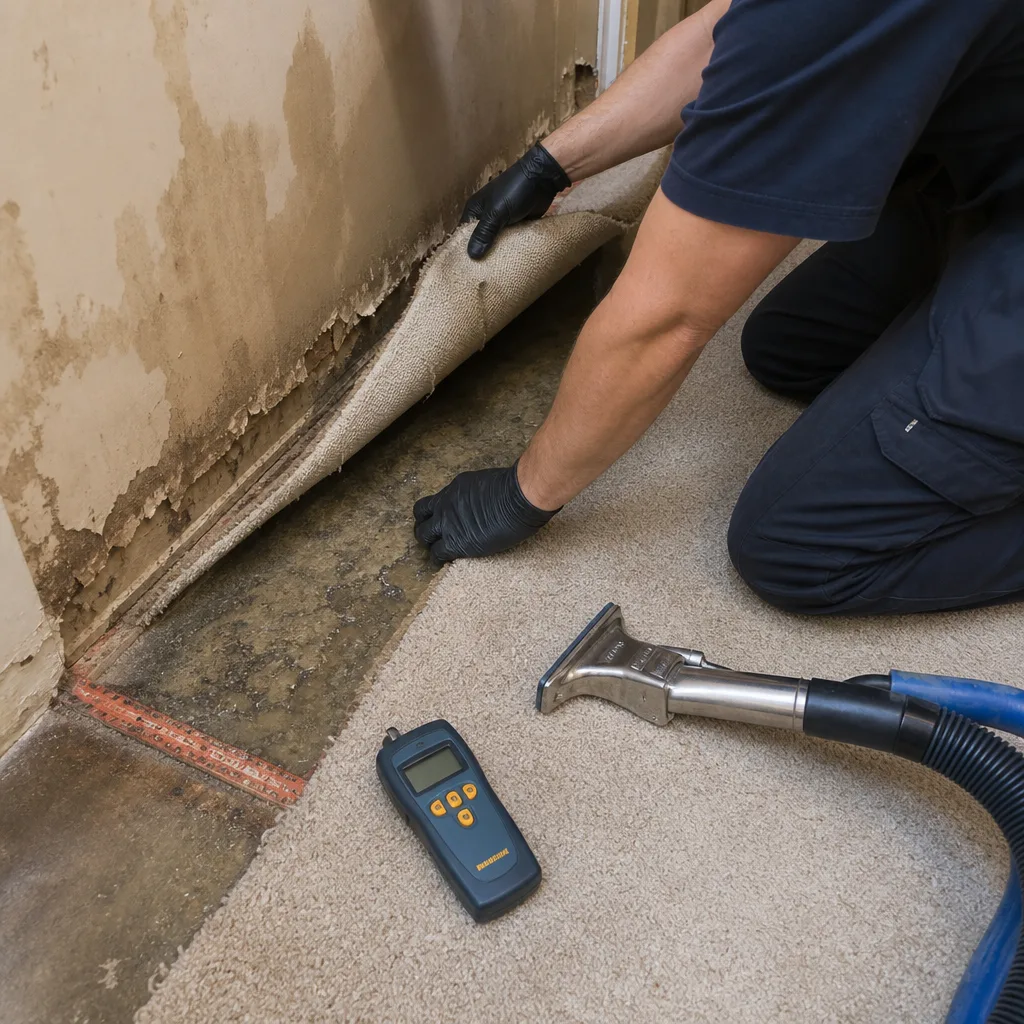
Insurance adjusters review permits and inspection records for two purposes: to verify that the work was necessary and to verify that it was done to a standard the insurer is obligated to pay. Unpermitted work fails both tests.
The first test is scope validation. The adjuster compares the claimed damage to the permitted work. If a contractor claims $15,000 for kitchen cabinet replacement after water damage, but the only permit on file is for plumbing repair, the adjuster questions whether cabinet replacement was necessary or whether it was an upgrade slipped into the claim. A permit for the full kitchen restoration, with inspections for plumbing, electrical, and final finish, validates the scope.
The second test is code compliance. Most property insurance policies include a “compliance with law” clause that excludes coverage for work required to bring a building up to current code unless the policy specifically includes ordinance or law coverage. However, the inverse also applies: if the work was done without required permits, the insurer may argue that the contractor’s failure to comply with law voids coverage for defects or subsequent damage arising from that work. We have seen this argument used to deny mold claims where the original water damage was repaired by an unlicensed contractor who did not obtain a plumbing permit.
The documentation package that supports a clean claim includes:
- Emergency Work Notification, if applicable, with timestamped photos.
- All DOB permits with approved plans and amendments.
- Inspection sign-off records for every required checkpoint.
- DEP asbestos completion certificates, if applicable.
- DOHMH Mold Remediation Clearance Certificate, if applicable.
- Certificate of Completion or Letter of Completion.
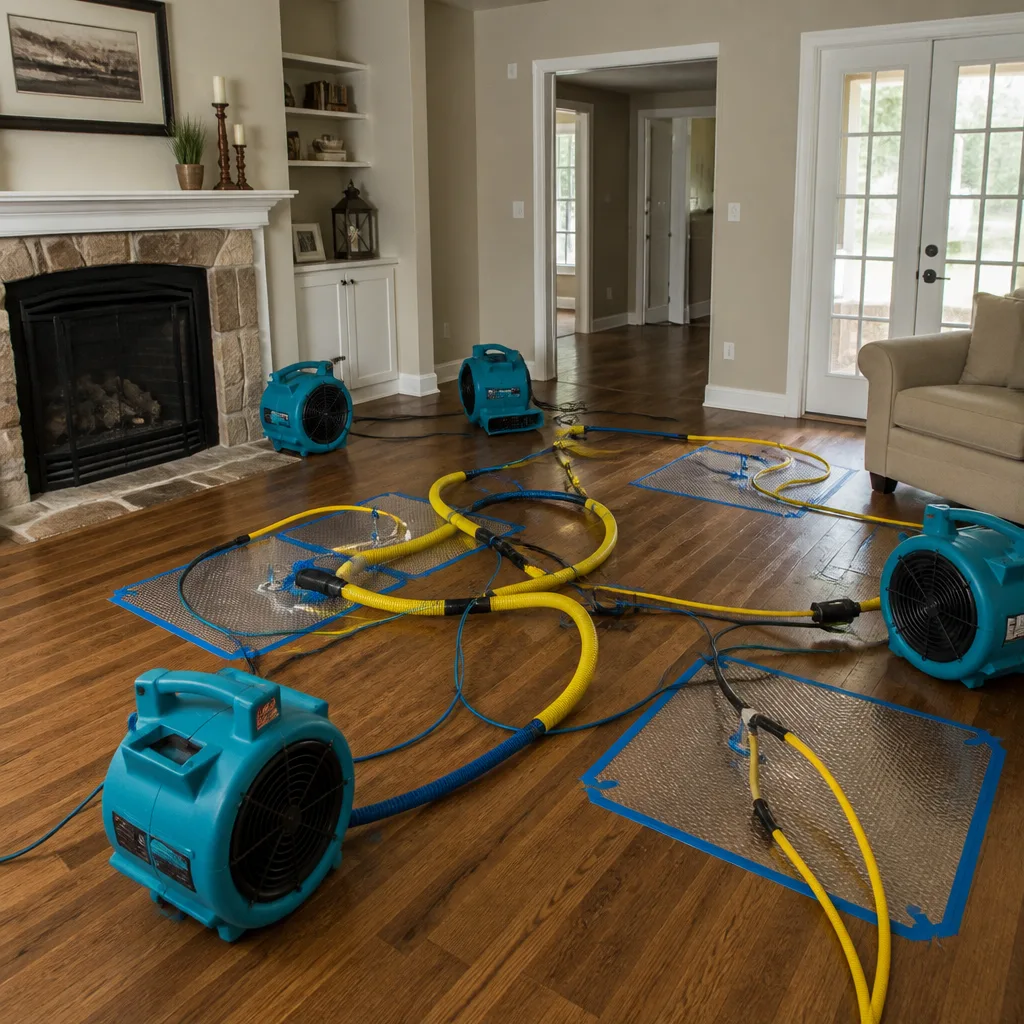
- Daily drying logs with psychrometric data, equipment placement maps, and moisture readings to IICRC standards.
- Photo record of all work phases, delivered as a standard report.
This is the documentation that turns a restoration invoice into a claim an insurer will pay without a fight. It is also the documentation that Water Damage Restoration in Financial District customers receive as a standard deliverable, never an upsell. The Haven Standard requires it.
Financial District-Specific Compliance Considerations
Financial District restoration work carries compliance layers that do not apply uniformly across New York City. Understanding them before work begins prevents mid-job surprises that delay claims and inflate costs.
Landmarks Preservation Commission jurisdiction covers much of the district, including individual landmarks and the Wall Street Historic District. Any work visible from the street, including window replacement, façade repair, and exterior signage, requires LPC approval in addition to DOB permits. Emergency stabilization of a landmark façade after storm damage can proceed without LPC approval if it is temporary and reversible, but permanent repairs require a full LPC permit. We coordinate these filings simultaneously so the DOB permit is not held up waiting for LPC clearance.
Many Financial District buildings are governed by Article 23 of the NYC Health Code, which imposes additional requirements on cooling tower maintenance and water treatment. A water damage event that affects a cooling tower system triggers DOHMH notification requirements and may require system disinfection before restart. The documentation of that disinfection becomes part of the insurance claim for business interruption losses.
Building height and density create access constraints that affect inspection scheduling. DOB inspectors require safe access to all work areas. In high-rise buildings, this may mean coordinating with building management for freight elevator access, roof access for exterior inspection, or confined space protocols for basement utility work. We build these coordination requirements into our project timelines and communicate them to adjusters so claim reserves reflect realistic schedules.
Finally, the concentration of commercial and mixed-use buildings in Financial District means many restoration jobs involve tenant spaces within larger buildings. The building’s Certificate of Occupancy may not match the tenant’s actual use, and the alteration history may not reflect tenant improvements. We verify both before scoping, because the insurance claim for a flooded restaurant kitchen depends on whether the kitchen was a permitted use under the CO.
Common Mistakes to Avoid
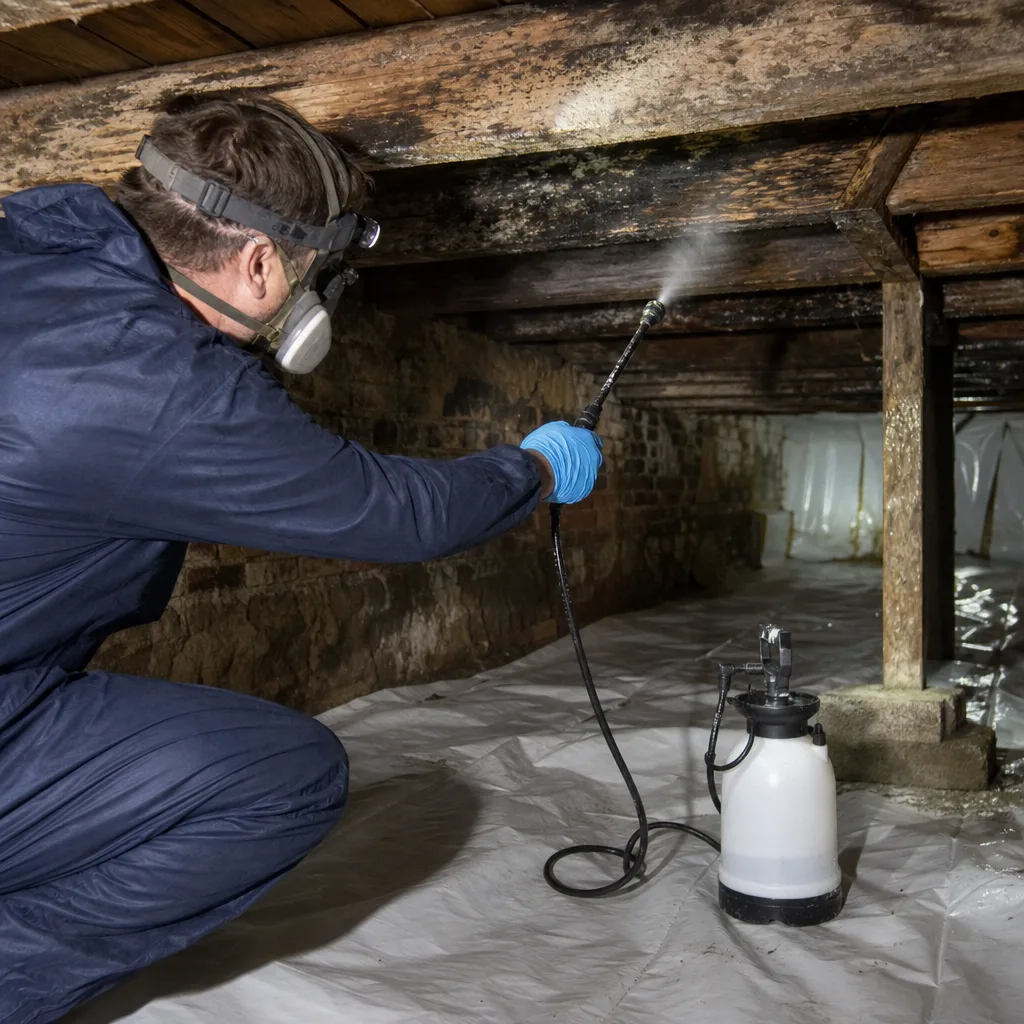
- Assuming emergency work needs no documentation. The emergency repair exemption allows immediate action, but without timestamped photos and a filed EWN, the work is legally unpermitted and insurers may deny subsequent claims.
- Starting mold remediation before the Mold Assessment. DOHMH requires an independent Assessor’s plan before any remediation begins. Skipping this step voids the legal basis for the work and exposes the homeowner to violation notices.
- Disturbing suspect materials without asbestos testing. In pre-1981 Financial District buildings, this is a DEP violation with potential criminal penalties, and it stops insurance coverage for the abatement costs.
- Closing walls before rough inspections. Once drywall is installed over uninspected electrical or plumbing, the inspection cannot pass without removal. The cost of that removal and replacement is rarely covered by insurance.
- Failing to pull BIS records before scoping. Unpermitted prior work, outstanding violations, and CO conditions all affect what a restoration job legally requires. Discovering them mid-job changes the scope and the price.
- Separating mitigation and reconstruction contracts without coordinated permitting. When two contractors handle different phases, inspection responsibility often falls through the gap, leaving permits open and insurance payments held.
- Accepting verbal assurances about permit status. A permit is real when it appears in BIS with an active status and scheduled inspections. Verbal claims from contractors are not documentation and do not support insurance claims.
When to Call a Professional
Call a licensed restoration contractor before you need emergency work, so you know who will document the permit filing correctly when water is still moving. See How to Hire a Damage Restoration Contractor in Financial District: A Step-by-Step Guide for what to verify. Call immediately when damage involves structural elements, electrical systems, or suspected mold or asbestos. Call when your insurance adjuster asks for permit documentation you do not have. DryMark Restoration Financial District offers free estimates in Financial District. Our written scope, delivered before any work begins under Haven Standard, Clause 1, includes every required permit and inspection checkpoint. Call (551) 212-1492.
Frequently Asked Questions
Any work that alters structural elements, electrical or plumbing systems, or the use of a space requires a DOB permit; cosmetic repairs like painting and flooring replacement typically do not. In Financial District landmark buildings, exterior work also requires Landmarks Preservation Commission approval regardless of whether DOB permitting is triggered. If you are uncertain, pull the BIS record for your building or ask your contractor to include permit requirements in the written scope before work begins. Browse our more guides & resources for additional Financial District restoration guidance. Call (551) 212-1492 for a free estimate that includes permit analysis.
Yes, emergency repairs that address immediate hazards to life, health, or property can proceed without a permit, but the contractor must photograph the condition before work begins and file an Emergency Work Notification with DOB within five business days. Failure to file voids the legal basis for the emergency work and can cause insurers to deny coverage for related damage. Our crews timestamp every emergency photo to the second and file the EWN as standard practice.
Most property insurance policies cover permit and inspection costs as part of the rebuild scope, provided the work is necessary to restore the property to its pre-loss condition and the permits are obtained correctly. Policies with ordinance or law coverage also cover code upgrade costs that exceed pre-loss conditions. Unpermitted work is generally not covered, and the cost of correcting unpermitted conditions falls outside standard policy limits. We document every permit in our written scope so the adjuster sees the cost upfront.
The insurer may dispute coverage for the damaged areas until the unpermitted condition is documented and resolved, which typically requires obtaining a retroactive permit or legalizing the work. This delays the claim but does not necessarily void it if the current damage is separate from the unpermitted condition. We pull BIS records at the start of every significant job to identify unpermitted work before the adjuster does, so we can address it in the initial scope rather than mid-claim.
DOB inspection scheduling varies by trade and building access constraints; typical ranges are 3-10 business days for routine inspections and longer for specialized inspections or buildings with limited access hours. High-rise buildings requiring freight elevator coordination or confined space protocols may experience additional delays. We build realistic inspection schedules into our project timelines and communicate them to adjusters so claim reserves reflect actual completion dates, not optimistic guesses.
The contractor is responsible for correcting failed inspection items and scheduling re-inspection, at no additional cost to the homeowner, if the work was performed under a fixed-price contract that included permit compliance. If the homeowner denied access or changed the scope after approval, responsibility may shift. Our Haven Standard, Clause 1 written scope includes all inspections as part of the fixed price, and our 365-Day Done Right Promise covers corrective work if an inspection failure results from our error.
The Bottom Line
New York City permits and inspections are the documentation framework that makes insurance claims payable. Emergency work without proper filing, mold remediation without DOHMH assessment, and reconstruction without fire-resistive compliance all create the same outcome: delayed or denied claims. The restoration contractor who treats permits as paperwork and the one who treats them as claim support produce different financial results for the same physical damage. In Financial District, where building age, landmark status, and dense occupancy multiply the compliance layers, permit discipline is not optional. It is the difference between a closed claim and a six-month dispute.
Written by Alicia Brennan, Owner at DryMark Restoration Financial District, serving Financial District since 2011.